Structure of a Bacterial Cell
Physical 3D model & labeled poster board — clay, paper, and mixed craft materials
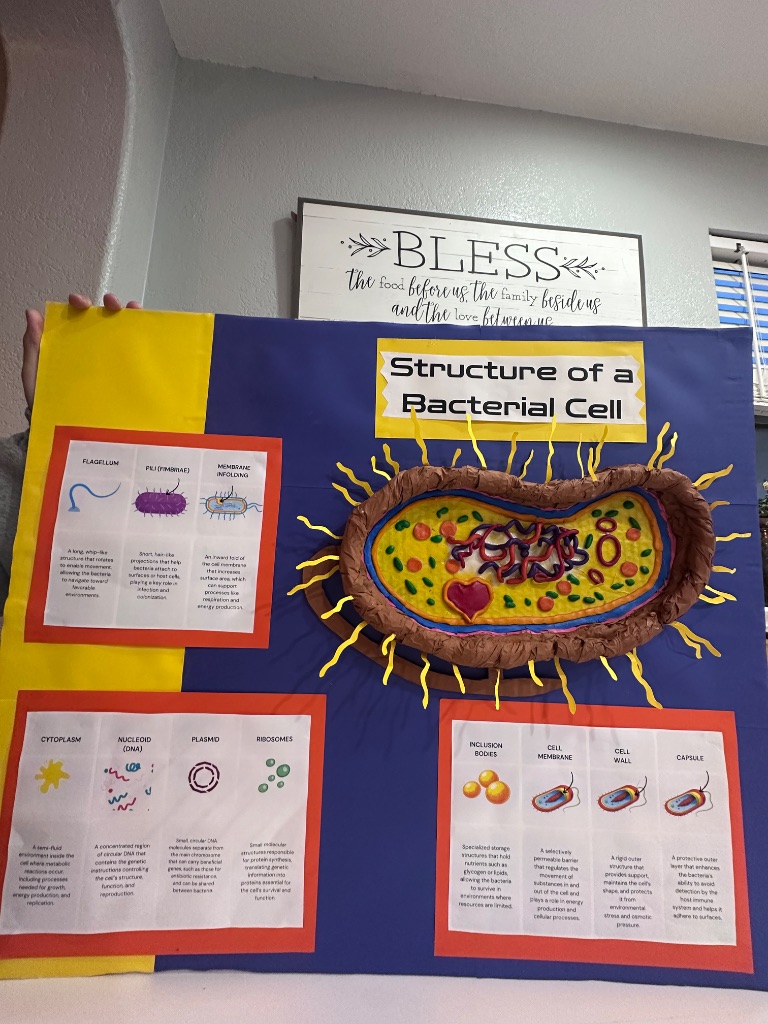
Labeled Components
-
Flagellum
-
Pili (Fimbriae)
-
Capsule
-
Cell Wall & Cell Membrane
-
Cytoplasm
-
Nucleoid (DNA)
-
Plasmid
-
Ribosomes
Public Health Connection
Pertussis Connection
Bordetella pertussis uses fimbriae and pili to colonize the respiratory tract. The plasmid-like elements in this model represent the mobile genetic elements that help bacteria adapt and resist antibiotics over time.
Why This Matters for Treatment
Understanding bacterial structure explains how antibiotics work: cell-wall inhibitors (penicillin, amoxicillin) target the cell wall; macrolides (azithromycin) target the ribosomes. This is why antibiotic choice depends on the type of bacteria causing the infection.
Structure of the Influenza Virus
Physical 3D model & labeled poster board — foam, craft materials, and printed diagrams
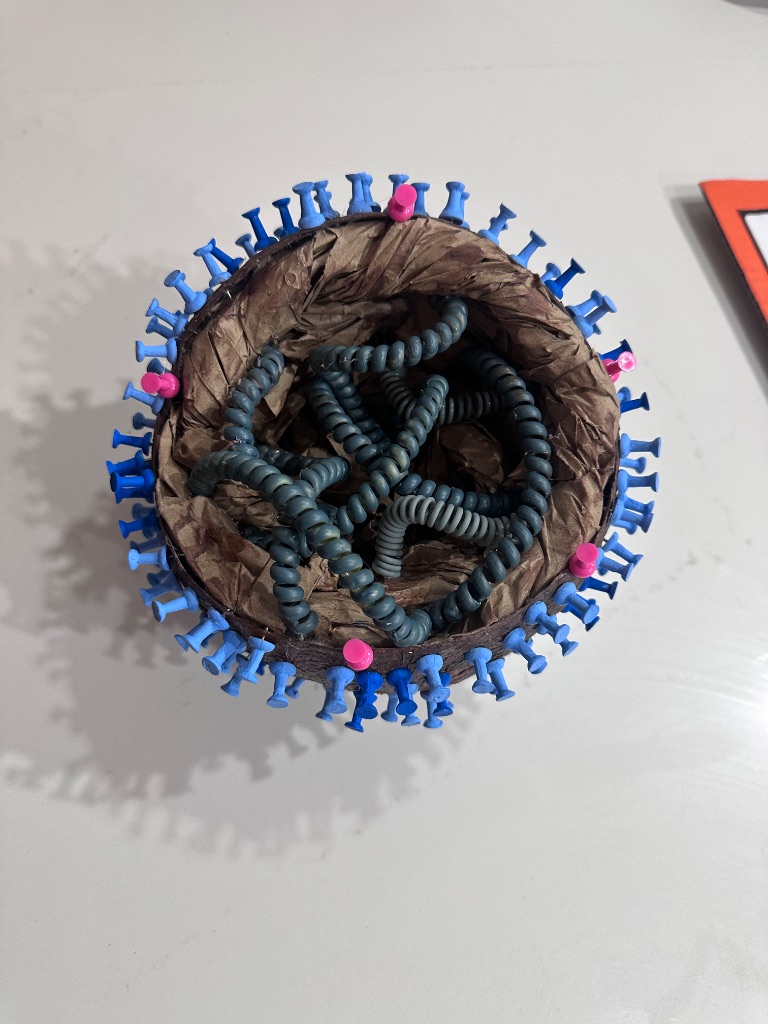
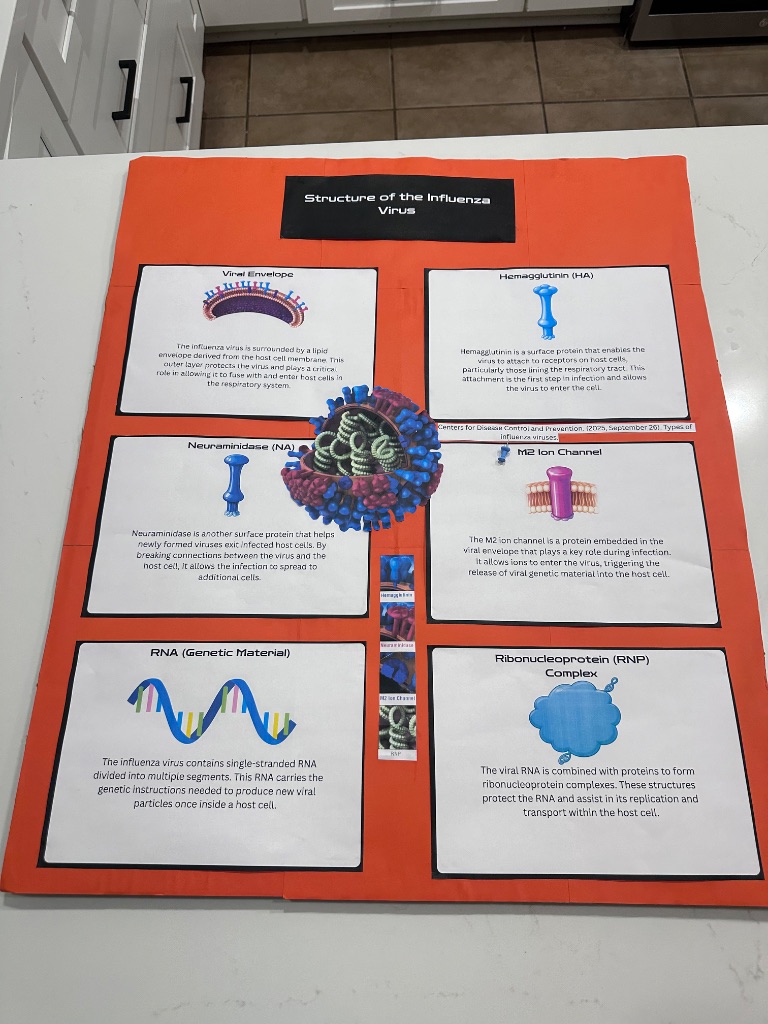
Labeled Components
-
Viral Envelope
-
Hemagglutinin (HA)
-
Neuraminidase (NA)
-
M2 Ion Channel
-
RNA (Genetic Material)
-
Ribonucleoprotein (RNP) Complex
Why HA & NA Matter in Schools
Hemagglutinin (HA) allows the influenza virus to bind to cells in the respiratory tract, while Neuraminidase (NA) helps newly formed viruses escape the host cell. Because children in schools are in close contact, these surface proteins allow the virus to spread rapidly through classrooms and shared air.
How Vaccines Target This Model
Annual influenza vaccines are formulated to produce antibodies against the HA and NA proteins shown in this model. When HA changes through antigenic drift, the vaccine must be updated — which is why a new flu vaccine is developed every year.
Antiviral Drugs & This Model
Oseltamivir (Tamiflu) and zanamivir (Relenza) are neuraminidase inhibitors — they block the NA protein on this model, preventing the virus from budding out of infected cells. These antivirals are most effective when taken within 48 hours of symptom onset.